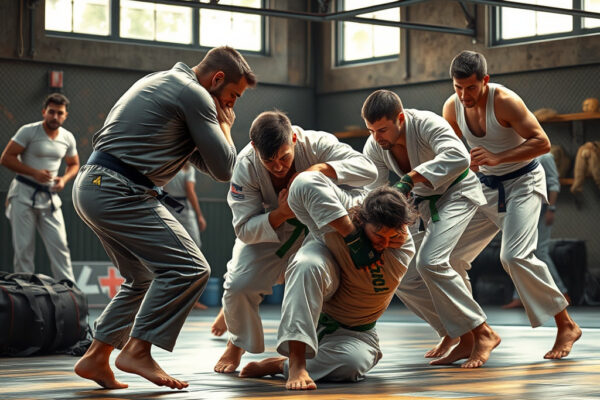




Brazilian Jiu-Jitsu (BJJ)
Brazilian Jiu-Jitsu (BJJ) is a martial art that emphasizes ground fighting and grappling, focusing on submissions, positional control, and leverage. BJJ, which was developed from traditional Japanese jujutsu, gained prominence in early 20th-century Brazil. It has since become a cornerstone of modern MMA.
Key Features:
Techniques: BJJ techniques revolve around:
Submissions: Joint locks and chokeholds that force an opponent to tap out.
Guard Positions: Defensive stances to control an opponent on the ground.
Sweeps and escapes are techniques. They shift you from a bad position to a better one.
Leverage and Technique: BJJ teaches using leverage and technique, not strength. It lets smaller people defend themselves against larger opponents. So, it's a practical self-defense system.
Sparring and Rolling: A unique aspect of BJJ training is "rolling," a form of live sparring. It allows practitioners to test their skills against resisting opponents in real-time.
Practical Applications:
People praise BJJ for its self-defense skills. It is key in MMA training. Many fighters use BJJ to improve their ground game and submissions in competitions.